nami charlotte
7+ audience segments mapped
complete website architecture developed from discovery
messaging framework across 6 audience segments
dual-org alignment across 2 states for the navigator project
7+ audience segments mapped complete website architecture developed from discovery messaging framework across 6 audience segments dual-org alignment across 2 states for the navigator project
-
NAMI Charlotte came to this engagement with two distinct but related problems. First, their existing website had grown cluttered and unfocused, making it difficult for the people who needed them most to find what they were looking for. Second, they were partnering with Here for Texas to build the Navigator, a joint AI-powered mental health resource tool designed to help people find care quickly and without barriers. Both projects shared the same core communications challenge: mental health organizations often build infrastructure for themselves rather than for the people arriving in a moment of need. Getting the foundation right meant fixing that.
-
Communications Strategy & Website Architecture
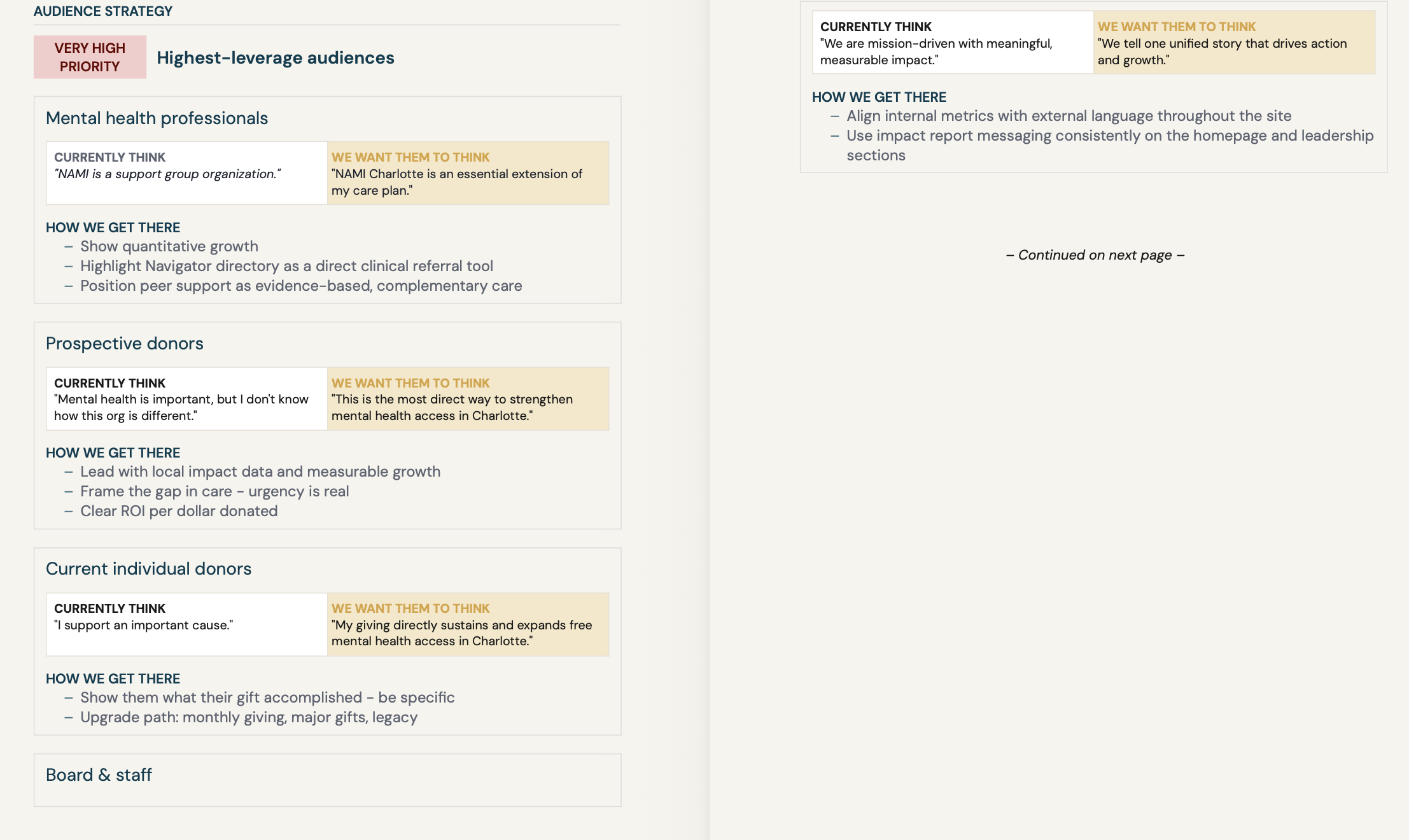
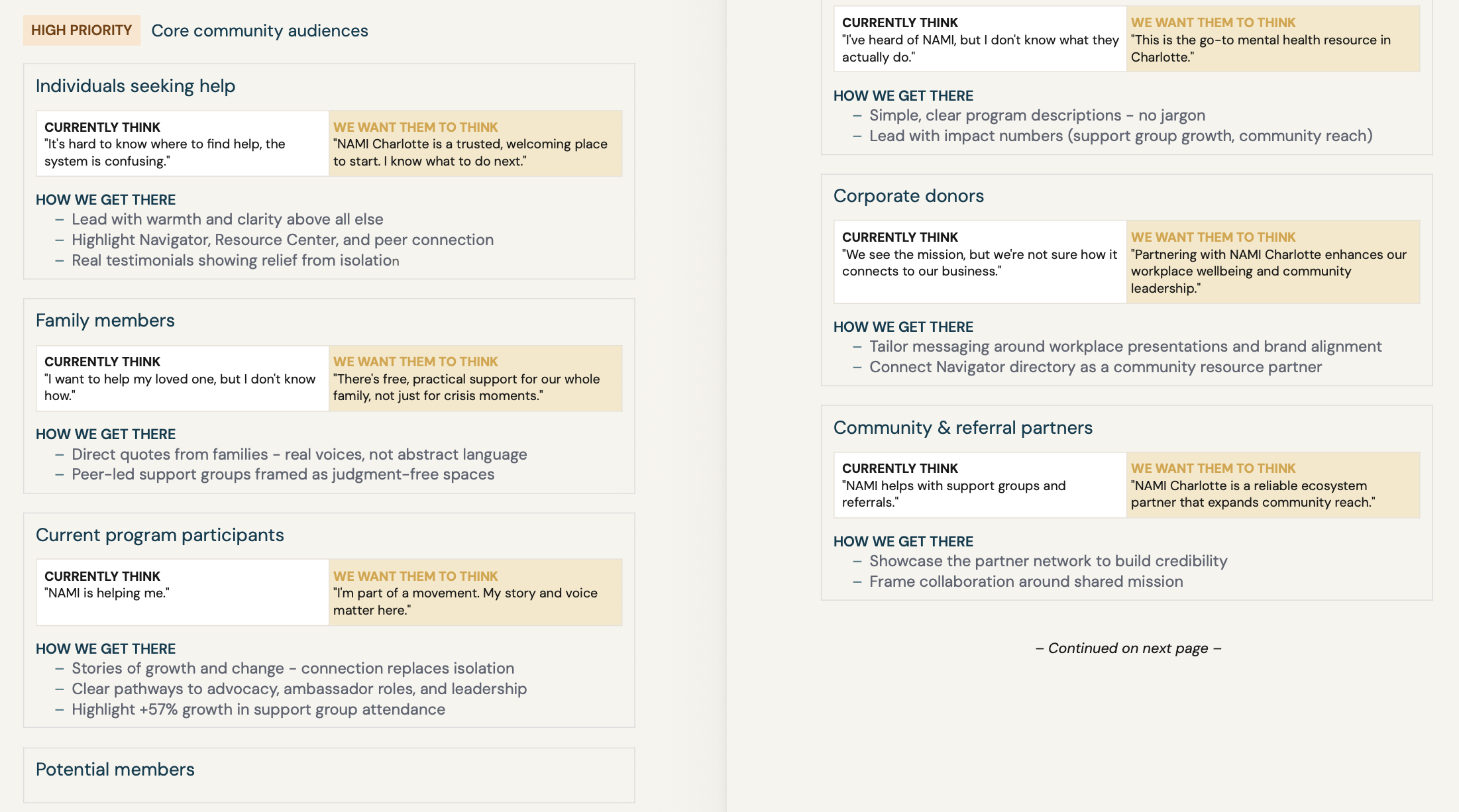
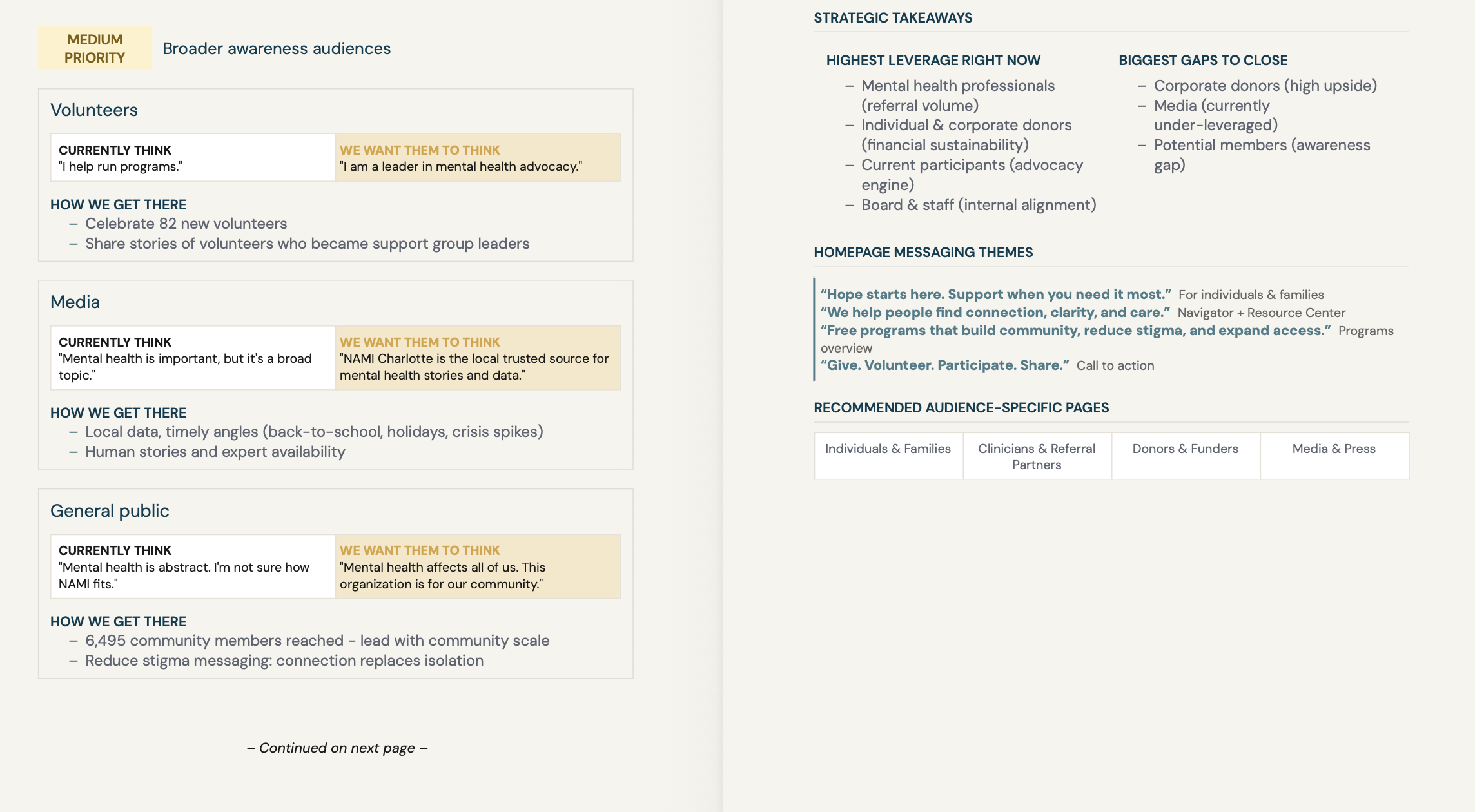
Before any campaign gets planned or any content gets written, an organization needs to know exactly who it's talking to and how information should be organized for each of those audiences. I developed a comprehensive stakeholder map identifying every audience NAMI Charlotte communicates with: individuals living with mental illness, family members and caregivers, mental health professionals, donors, community partners, volunteers, and more. For each group, the map defined their relationship to the organization, their primary needs, the moments where they're most likely to engage, and the channels through which they're best reached. Drawing directly on that foundation, I then developed a full website architecture: a structural plan defining how information should be organized, what belongs on each page, how navigation should flow, and what the primary calls to action should be at each point in the user journey. The goal was to reduce cognitive overload, create clear pathways for each audience type, and make it significantly easier for someone in a moment of need, or a donor looking to give, to find exactly what they needed.
The Navigator Messaging Strategy (with Here for Texas)
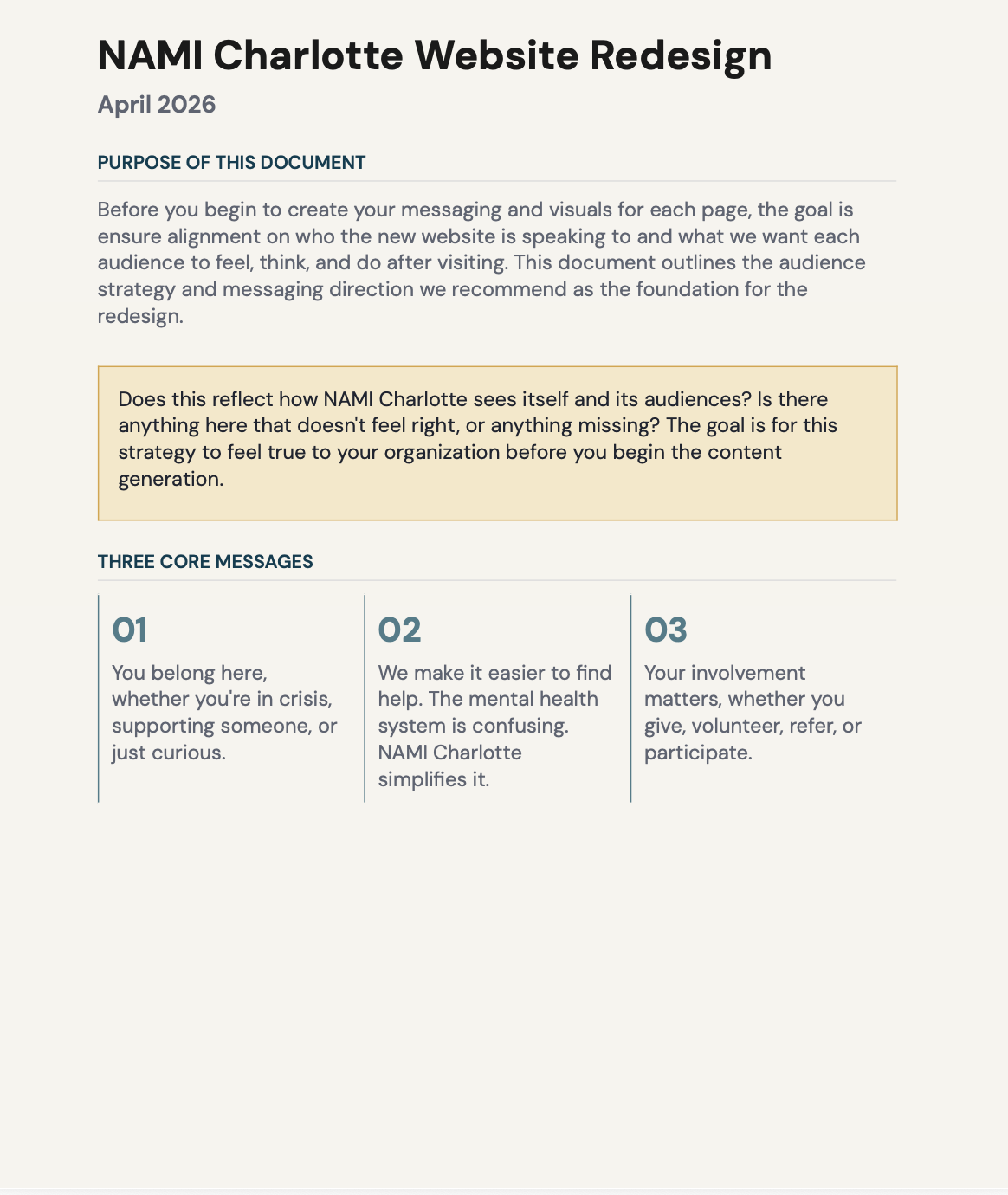
For the Navigator itself, I served as the lead strategist on audience strategy and messaging. I started by defining what the site was and wasn't, a deceptively simple exercise that turned out to be foundational for aligning two organizations across two states on every subsequent decision. I mapped six audience segments, prioritized them by urgency, and built a messaging strategy for each using a "currently think / want them to think / how we get there" framework. The three core brand messages were written in plain language with zero clinical terminology, designed to work at every level (site copy, social, partner communications, and print). The full deliverable was structured for organizational sign-off, with feedback prompts built in, so development and copywriting could proceed without returning to square one.
-
Complete stakeholder map across 7+ audience segments delivered as a reusable strategic foundation
Full website architecture developed from discovery, designed to directly increase donations and community participation
Six-segment audience strategy and three core brand messages delivered for the Navigator
Dual-organization alignment achieved across NAMI Charlotte and Here for Texas spanning two states
Complete messaging framework handed off to development and copywriting teams as an immediately actionable brief
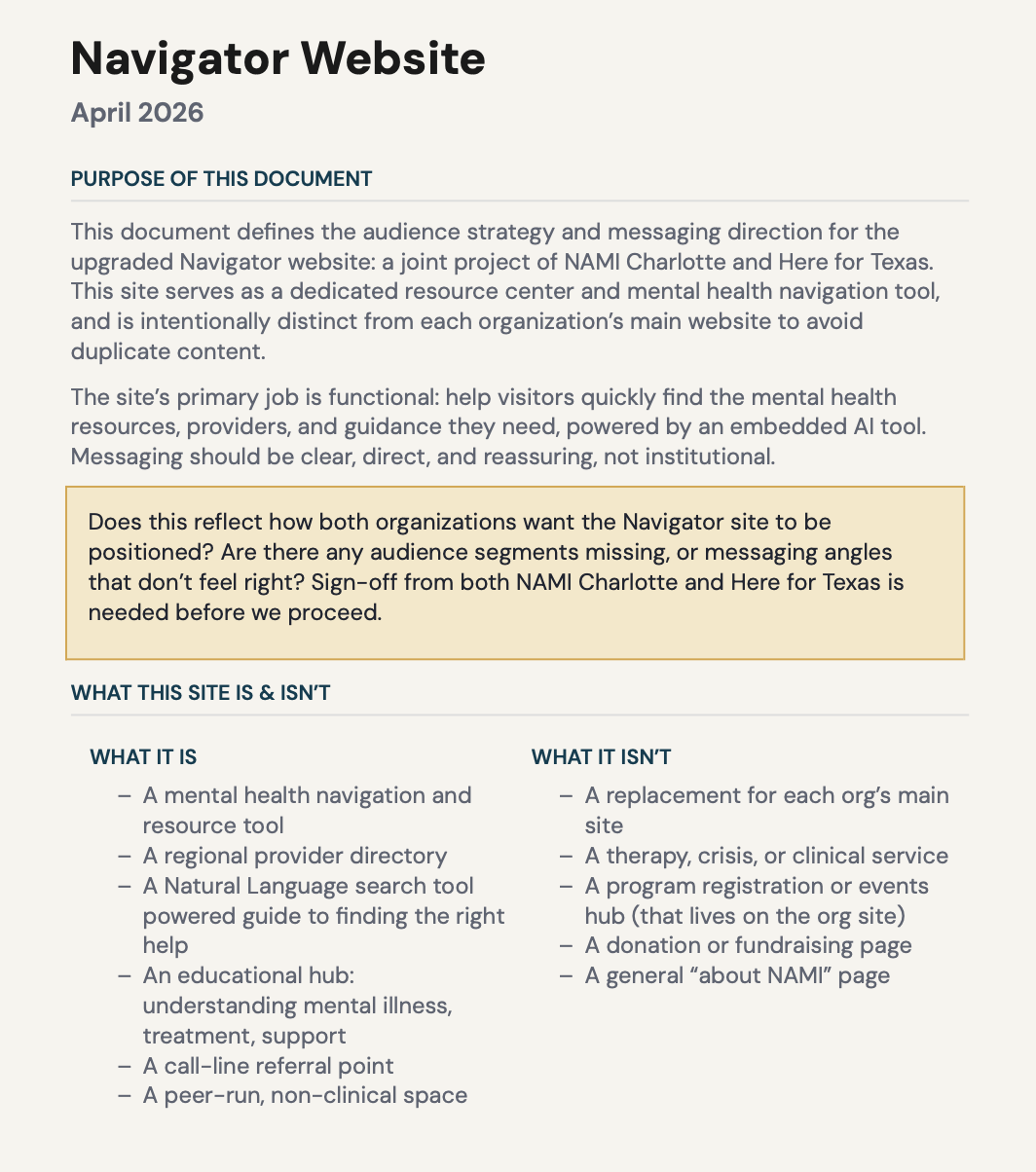
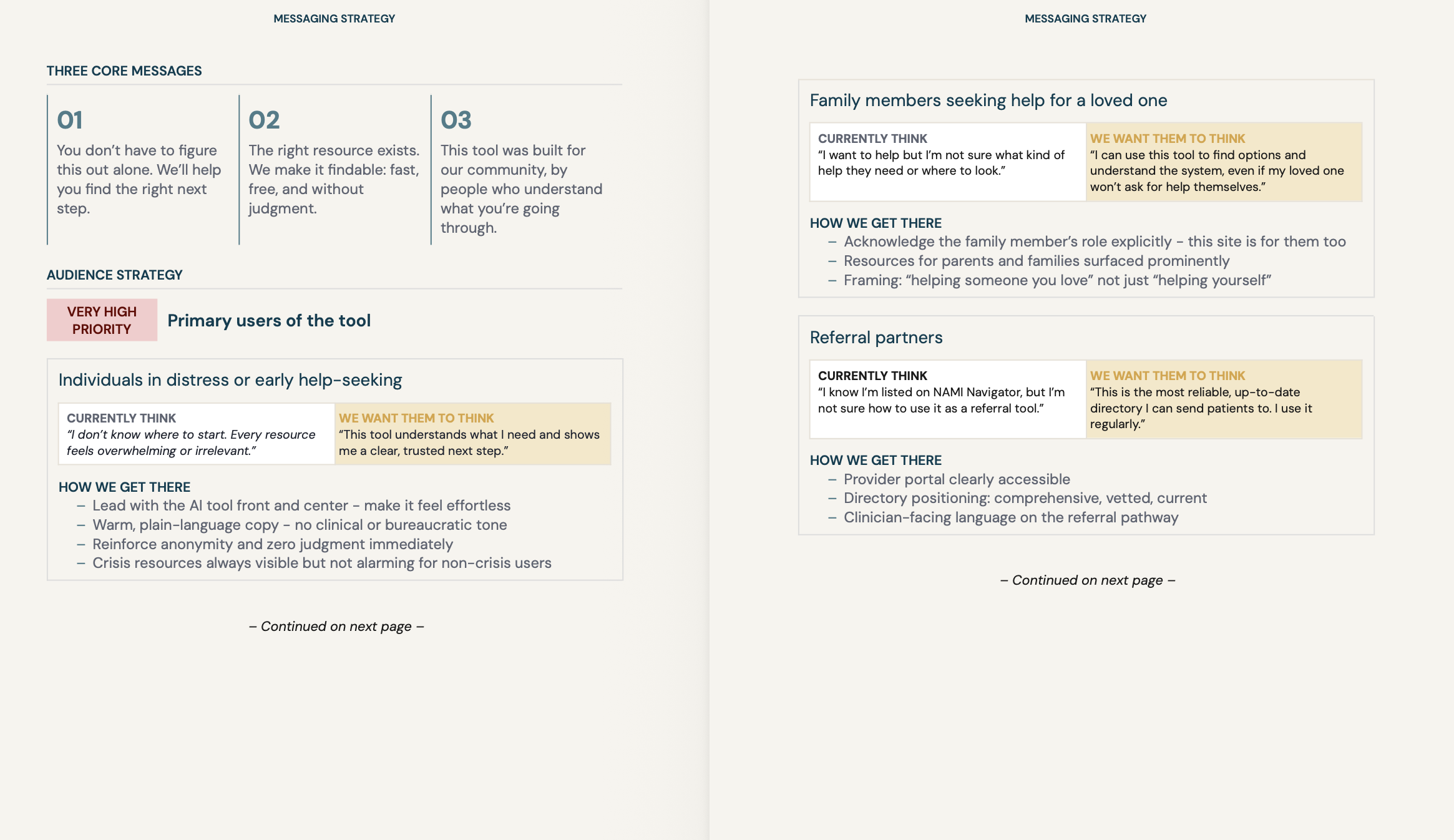
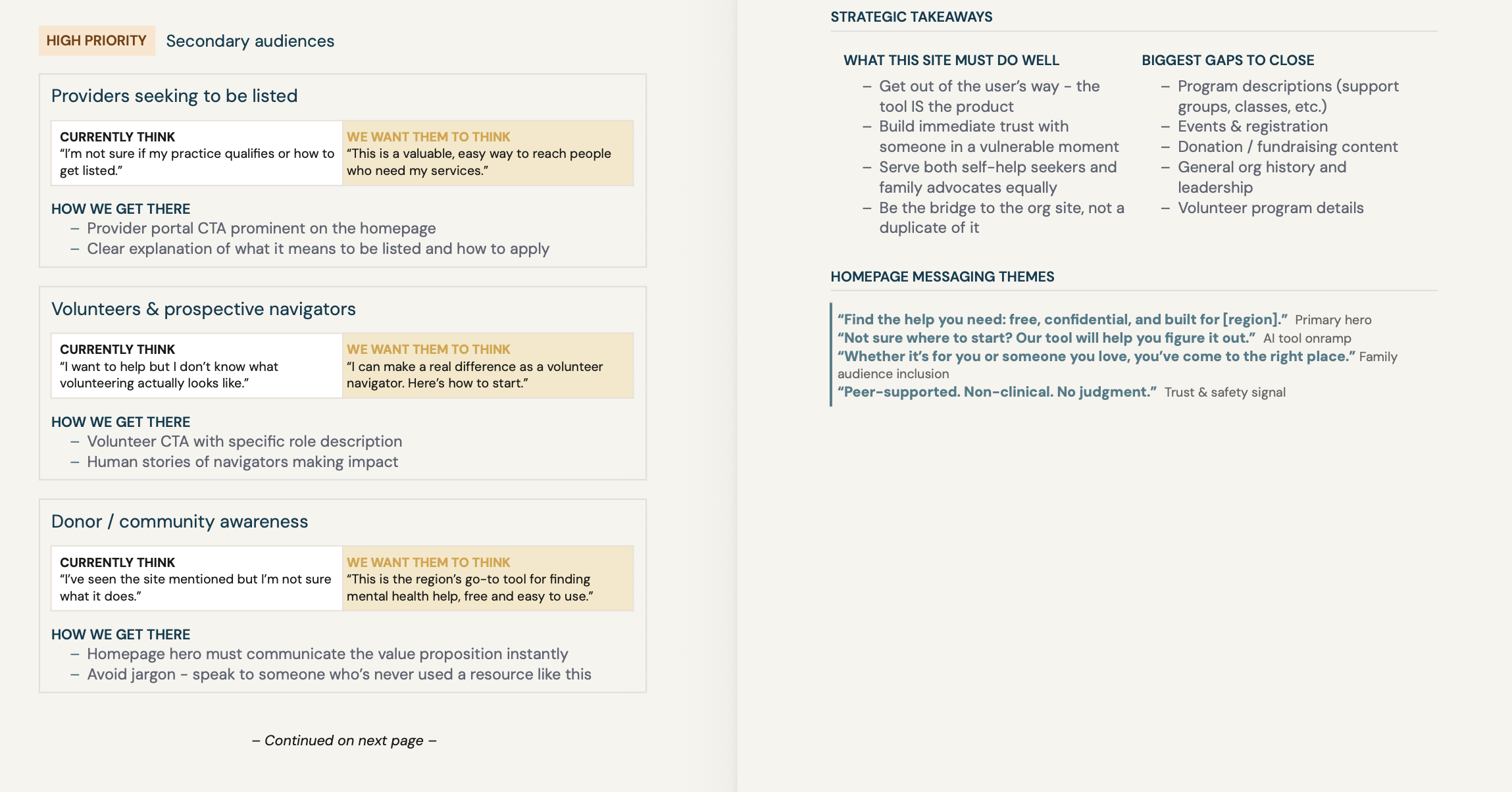
Stakeholder mapping and messaging strategy for NAMIC org website and Navigator project with HFT